Training
Why Does My Dog Pull on the Leash? (And How to Stop It)
If walking your dog feels more like an upper-body workout than a relaxing stroll, you are not alone. Leash pulling is one of the most common behavioral issues dog owners face. It's frustrating, exhausting, and can even be dangerous on icy sidewalks or in heavy traffic.
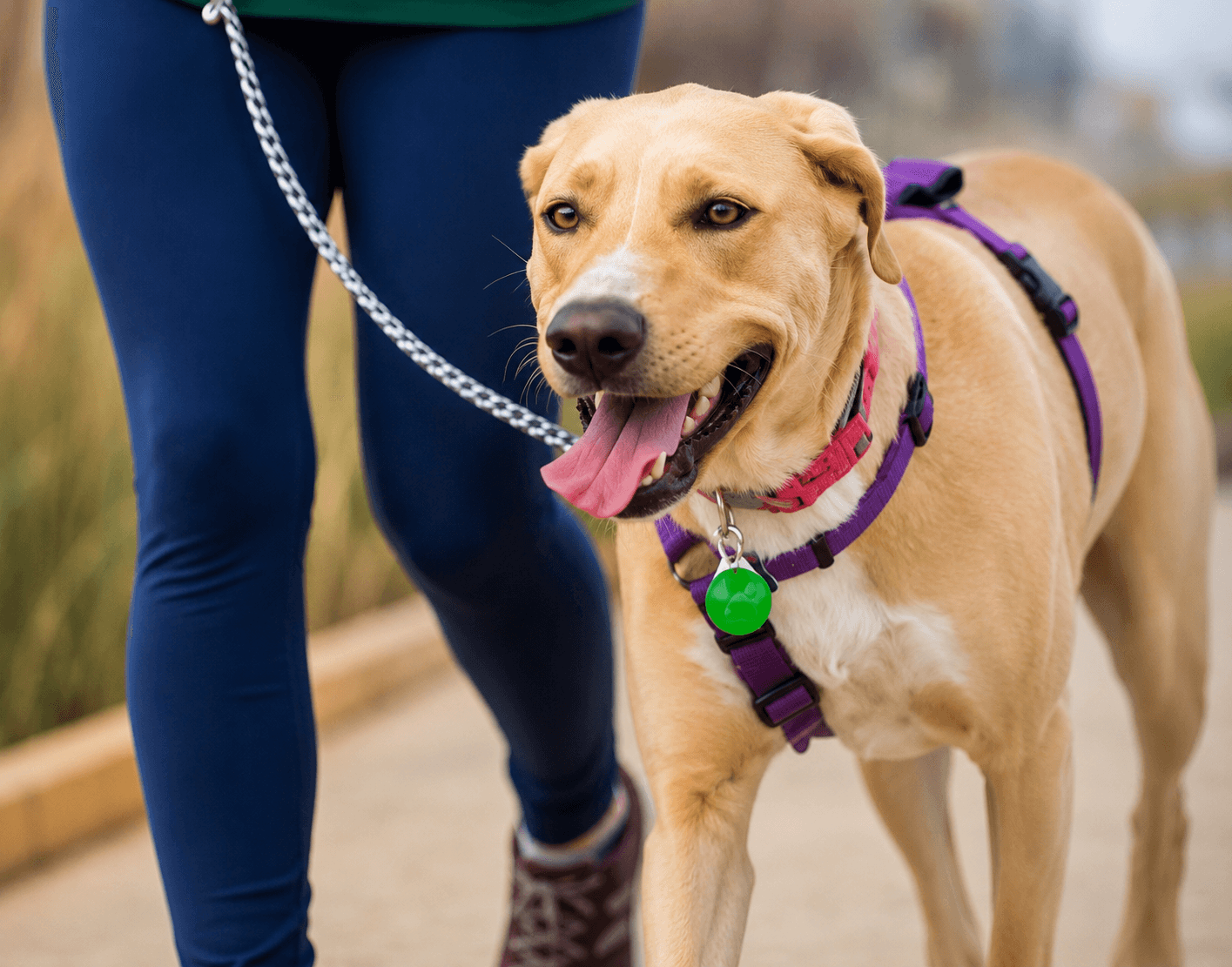
If walking your dog feels more like an upper-body workout than a relaxing stroll, you are not alone. Leash pulling is one of the most common behavioral issues dog owners face. It's frustrating, exhausting, and can even be dangerous on icy sidewalks or in heavy traffic.
At DTdogs.ca, we see this daily. The good news? Your dog isn't pulling to make you miserable or to assert dominance. They are pulling because of a few natural instincts—and because, somewhere along the line, pulling started working for them.
Here is a breakdown of why your dog pulls, and the structured walking techniques we use to help you regain control.
Why Your Dog Pulls
Before you can fix the behavior, you need to understand what is driving it.
Pace Mismatch
Humans naturally stroll at about 2.5 to 3 miles per hour. A dog's natural trotting pace is closer to 4 or 5 miles per hour. To them, we are moving in slow motion. Pulling is often just a practical attempt to walk at a comfortable speed.
The Oppositional Reflex
Dogs have a natural instinct to push against pressure. When they feel tension on their chest or neck, their automatic physical response is to lean into it. By pulling back on the leash, you are inadvertently triggering them to pull forward harder.
Accidental Reinforcement
Dogs do what works. If your dog pulls toward a fire hydrant and you eventually let them reach it to sniff, you just taught them that pulling pays off. The tension on the leash became the currency they used to buy their reward.
Overstimulation
The outside world is a sensory explosion. If your dog hasn't been taught how to engage with you amidst distractions, the environment will always win their attention.
How to Build a Structured Walk
Fixing leash pulling requires a shift in how you communicate. It isn't about using physical force; it is about controlling the environment and rewarding the right choices.
1. Upgrade Your Equipment
Ditch the retractable leash. Retractable leashes maintain constant tension on the dog's collar, teaching them that a tight leash is the default state. Switch to a standard 4-to-6-foot flat leash. If your dog is a heavy puller, consider a front-clip harness or a properly fitted training collar. Equipment won't fix the behavior on its own, but it gives you the leverage to start training safely.
2. Stop Paying for Pulling
The moment the leash goes tight, your forward momentum must stop immediately. Plant your feet and act like a tree. Do not pull your dog backward; simply hold your ground. The second your dog relieves the tension—even by turning their head or taking half a step back—praise them and resume walking. You are teaching them a new, unbreakable rule: A tight leash turns off the world; a loose leash turns it back on.
3. Change Direction
If stopping isn't enough, turn around. When your dog surges ahead, smoothly pivot 180 degrees and walk the other way. This breaks their fixation on whatever they were pulling toward and forces them to pay attention to your physical location. When they catch up to you in the new direction, reward them.
4. Reward the "Sweet Spot"
Don't just correct the bad behavior—heavily reward the good. When your dog chooses to walk beside you with a loose leash, or when they look up at you to check in, reward them with a high-value treat or enthusiastic praise. You want to make the space right next to your leg the most valuable place in the world to be.
5. Separate "Work" from "Play"
At DTdogs.ca, we advocate for structured walks. This means the dog is beside you, engaged, and moving at your pace. However, dogs still need to sniff and decompress. Assign a specific verbal cue (like "Go Sniff" or "Free") to let them know when it is acceptable to lead the way and explore, and another cue (like "Let's Go" or "Heel") for when it is time to focus and walk structurally.
Consistency is Everything
Loose-leash walking is a marathon, not a sprint. It requires patience, consistency, and timing. If you allow pulling on Tuesday because you are in a rush, your dog will try it again on Wednesday.
If you are struggling to make progress, you don't have to figure it out alone. At DTdogs.ca, we specialize in translating canine behavior and building clear communication between you and your dog. A few targeted sessions can completely transform your daily walks from a chore into a partnership.
— www.Sunnyism.Pro for DTdogs.ca