Training
The Best Equipment for Heavy Puller Dogs: A Complete Guide
If you've ever felt like your dog is auditioning for the Iditarod every time you step outside, you know that standard walking gear just doesn't cut it. A heavy puller isn't just exhausting to walk; they are a safety risk to themselves and to you.
If you've ever felt like your dog is auditioning for the Iditarod every time you step outside, you know that standard walking gear just doesn't cut it. A heavy puller isn't just exhausting to walk; they are a safety risk to themselves and to you.
At DTdogs.ca, we frequently work with owners who have tried everything. The truth is, while no piece of equipment will magically train your dog, the right tool acts as your steering wheel. It gives you the mechanical leverage needed to communicate effectively and keep both of you safe.
Here is a breakdown of the best equipment to help you safely manage and train a heavy puller.
Why Standard Gear Fails
Standard flat collars and back-clip harnesses are great for dogs that already know how to walk nicely on a loose leash. But for a heavy puller, they actively work against your training efforts.
Flat Collars: When a dog pulls hard against a neck collar, all the pressure is focused directly on their trachea. This can cause coughing, gagging, and long-term damage to their airway.
Back-Clip Harnesses: These are designed for sled dogs for a reason. Clipping the leash to your dog's back engages their center of gravity and allows them to put their entire body weight into pulling you forward.
See exactly how different gear distributes force across your dog's body:
*Key insight:* To stop pulling, you need equipment that redirects the dog's forward momentum rather than absorbing it.
1. The Front-Clip Harness
For the vast majority of pullers, a well-fitted front-clip harness is the best starting point.
Instead of clipping between the shoulder blades, the leash attaches to a D-ring in the center of the dog's chest. When your dog surges forward and hits the end of the leash, the tension gently pivots their shoulders and turns their body back toward you. This breaks their forward drive and naturally redirects their attention to the handler.
Best for: Moderate to heavy pullers, brachycephalic (flat-faced) breeds, and owners who need an immediate reduction in pulling force without using head collars.
2. The Head Halter
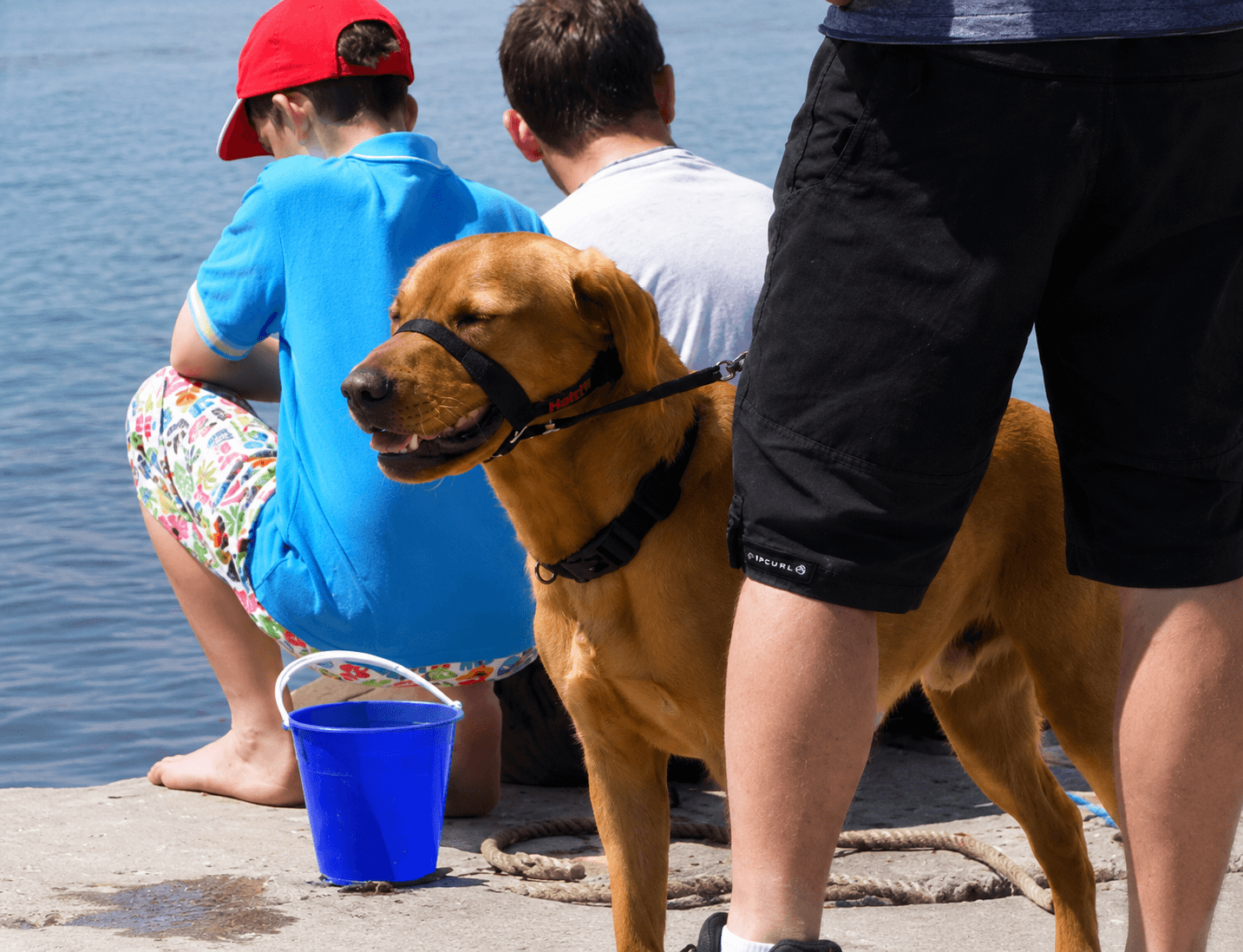
If you have a large, powerful dog that is physically overwhelming you, a head halter (like a Gentle Leader or Halti) offers unparalleled mechanical advantage.
A head halter works on the same principle as a horse's halter: where the nose goes, the body must follow. The leash attaches under the chin. If the dog tries to lunge, their head is gently guided back toward you, making it physically impossible for them to pull with their full body weight.
Best for: Extreme pullers, highly reactive dogs, or situations where the owner is significantly outsized by the dog.
Note: Head halters require a slow, positive introduction before use, as most dogs will initially try to paw them off.
3. The Martingale Collar
Also known as a limited-slip collar, a martingale is made with two loops. When the dog pulls, the collar tightens slightly—just enough to prevent the dog from slipping out, but not enough to choke them if fitted correctly.
While it doesn't offer the physical turning leverage of a front-clip harness, it provides a very clear sensation of pressure and release. The moment the dog stops pulling, the collar instantly goes slack, which is excellent for clear communication during training.
Best for: Dogs with narrow heads (like Greyhounds or Dobermans) who easily slip out of standard collars, and moderate pullers in active training.
The Golden Rule of Gear
Equipment is only as good as the training paired with it. A front-clip harness or head halter will give you the physical control you need to stop the pulling in its tracks, but you still need to reward the dog heavily when they choose to walk beside you on a loose leash.
If you are unsure which tool is right for your dog, or you need help conditioning them to wear it comfortably, reach out to the team at DTdogs.ca. We can help you find the perfect fit and build a structured walking routine that actually works.
— www.Sunnyism.Pro DTdogs.ca